Bi Sheng
毕昇
- 分类: 发明创造
- ID: 1862413822727102465
Home CategoryInvention and CreationBi ShengPlay3.5 minsBi Sheng (?-1051) was an innovator from the Song Dynasty (960-1127), recognized for pioneering movable type printing, marking a significant advancement in Chinese technological history.ShareCatalogue1. Early Life and Background2. Invention of Movable Type Printing3. Impact and Legacy4. Subsequent Developments5. Cultural Significance6. Modern Applications and Revival
Early Life and Background
Bi Sheng (?-1051) was an innovator born during the Song Dynasty (960-1127), an era marked by cultural and technological advancements in China. The Song Dynasty, which spanned from 960 to 1127, was a time when China was at the forefront of technological innovation, and Bi Sheng emerged as a pivotal figure in the history of printing technology.
Invention of Movable Type Printing
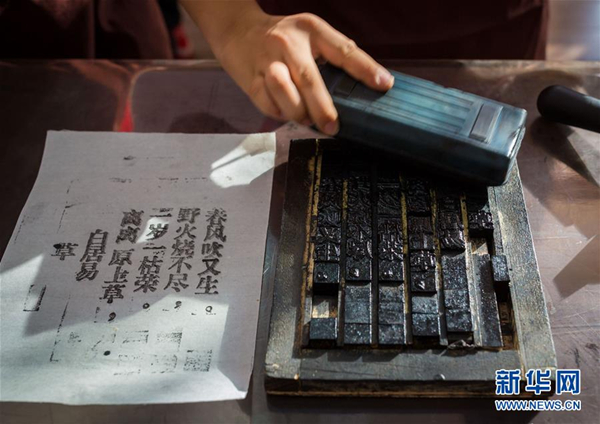
Bi Sheng is best known for developing the ceramic movable-type printing system, a groundbreaking invention that significantly impacted the history of print media. His innovation occurred between 1041 and 1048. Movable-type printing was a major advancement over traditional methods, where entire pages had to be carved onto wooden or stone blocks. Bi Sheng’s technique involved cutting types in relief, selecting characters according to a manuscript, arranging them in a type case, and applying ink to the surface. This process allowed for reusable types and facilitated more efficient reproduction of texts.
Impact and Legacy
The invention of movable-type printing by Bi Sheng marked a technological revolution, significantly influencing the dissemination of information and knowledge in China and beyond. Although the ceramic movable type was a pivotal development, it wasn't until four centuries later that Johannes Gutenberg, a German inventor, created the metal movable-type system that transformed printing in the West. Bi Sheng's contribution to printing technology laid the foundation for future innovations and was crucial in the development of the printing industry.
Subsequent Developments
Following Bi Sheng’s innovation, other methods of movable-type printing were developed. During the Yuan Dynasty (1271-1368), agriculturalist Wang Zhen created a method for making wooden movable types. In the middle of the Ming Dynasty (1368-1644), bronze movable-type printing became widely used in regions such as Nanjing, Wuxi, and Suzhou. These advancements built upon Bi Sheng's original invention, expanding the use and efficiency of movable-type printing.
Cultural Significance
Movable-type printing is considered one of the most important innovations in Chinese history, playing a critical role in the development of human civilization. It not only facilitated the spread of knowledge but also contributed to the preservation of cultural and historical texts. As a result, Bi Sheng’s work is celebrated as an integral part of China's rich heritage in technological innovation.
Modern Applications and Revival
With the advent of digital technology, traditional printing methods like letterpress have experienced a revival, known for their aesthetic and tactile qualities. Letterpress, a form of movable-type printing, is regaining popularity among designers and artists who appreciate the craftsmanship involved. The revival of this ancient printing technique highlights the enduring legacy of Bi Sheng's invention. Article reference1. Activity on movable-type printing staged in Chongchuan. en.nantong.gov.cn. 20202. Centuries-old printing technique makes a comeback. chinadaily.com.cn. 20193. Movable-type printing of China. chinaservicesinfo.com. 2018Photo Gallery(12 pictures)CategoriesInvention and CreationTagAncient Scientists and InventorsHistorical FiguresRelatedWooden Movable-Type Printing of ChinaPrintingCatalogue1. Early Life and Background2. Invention of Movable Type Printing3. Impact and Legacy4. Subsequent Developments5. Cultural Significance6. Modern Applications and Revival- - - []








